Nepal Trekking Information
Find below trekking information on the following topics.
You would find here the basic background information that would give you an idea for the planning of a trekking tour in Nepal .
Nepal Trekking Map
Popular Trekking Areas of Nepal
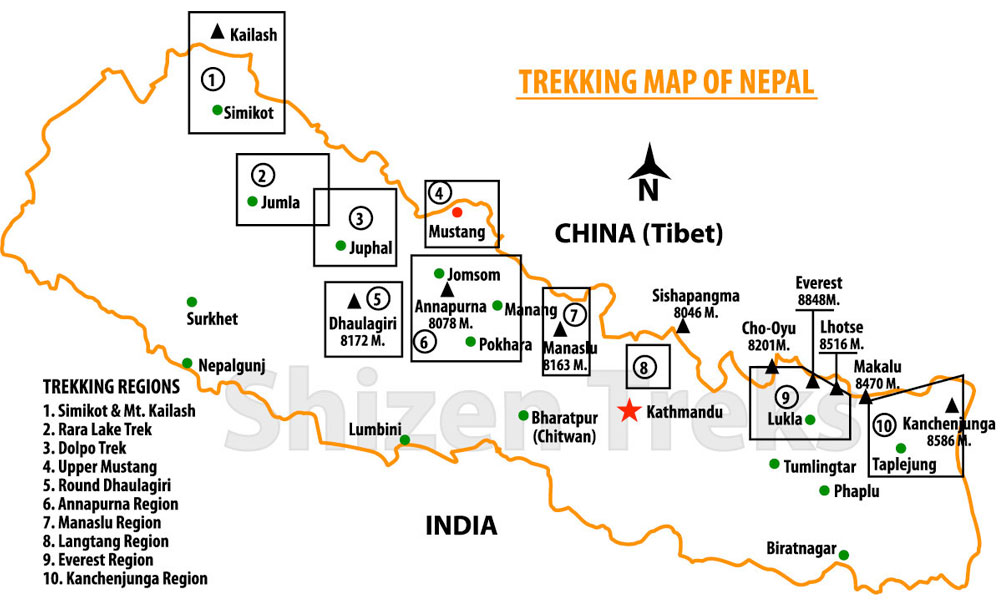
The most popular trekking areas are the Annapurna and the Mt Everest regions. These two areas receive almost 80 % of the total trekkers. Then comes the Langtang region. The Upper Mustang , Dolpo and Manaslu are exotic trekking areas to see preserved natural and cultural heritages. These are also quite popular treks . The Rara lake region in western Nepal and the Makalu and Kanchenjunga regions in eastern Nepal are other important areas, but they receive less trekkers due to lack of road access and not having lodges along the trekking trail.
The Best Treks in Nepal
If you ask which are the best treks in Nepal, it would be hard to answer as different regions are famous for different reasons and also it is a matter that depends on the personal interest of the individuals. However considering the mountain views, cultural experience and general popularity, The Everest Base Camp trek, , Gokyo Lake and Cho La pass trek, Annapurna Base camp trek (Annapurna sanctuary trek ), Annapurna circuit trek can be taken as the best treks in Nepal.
For those with interest in remote regions and exotic culture, the Mustang trek, Dolpo trek and Manaslu trek are the best choices.
Best Short Treks In Nepal
Tea House KitchenFor those who have only a short time to enjoy the Himalayan trekking in Nepal, the following could be the best treks , best on the mountain scenery, cultural experience and flora and fauna.
2 days – The Dhampus trek from Pokhara
3 days – The Ghandruk trek from Pokhara
4-5 days – The Ghorepani Poon Hill trek form Pokhara..
The one or two days Nagarkot hike or two days Chisapani hike are good treks that can be done from Kathmandu.
For those looking for a short trek in the Everest region, the 7 days Everest Mini Trek is really a great trek .
The Best Trekking Season
The time without snow and without rainfall is the best time to visit the mountain trails. That said, October to early December and March to Mid June are the best seasons for trekking in Nepal. This again depends on which area you want to visit .For example there are some very good treks that are done on relatively low altitudes and they can be done even in January (as there will be no snow there), the Poon Hill Ghorepani trek is one of them . Likewise wildflower treks and also Mustang trekking and Dolpo trekking in rain shadow zones are best done during summer days of July and August.
Trekking styles (Tea Houses or Camping Treks)
The popular trekking routes of Everest, Annapurna and Langtang have lodges at frequent stops .We can have lunch or stay for overnight in these lodges. A trek in which we use these lodges for our food and accommodation is called tea house trekking. Often these tea houses are family run inns with good basic facilities like clean bed and western and local foods but no luxury .Originally, before trekking was introduced in Nepal, there were small tea shops in the places where we have lodges now, serving tea and snacks for the local villagers travelling from one village to the other , hence the name " tea house." Unlike this , a fully supported trek in which we carry all our supplies and equipments is called camping trek or an organized trek. In such a trek our Sherpa crew will make the tents for you and our cook will prepare all the meals .
Trekking Porters and Guides
In each trekking group there will be one guide who will be in charge of all the arrangements in the trek and required number of porters. Generally one porter is provided for two trekkers, he carries a load of 20-25 kg depending on the trial, which is enough to include all the essentials of two trekkers in the mountains. They carry the load in the head in our traditional way, often the rucksacks or the duffel bags are easier for them to carry. We have assistant guide and a cook too in a bigger group to look after the food and lodging things.
However there will be a big number of kitchen staffs, porters and cooks in a fully supported camping trek /organized trek. Where available we use ponies or yaks to carry the luggages .
A typical trek day
Your trekking day starts at around 6 am with a cup of tea or coffee at your tent /l odge. You wash your face with warm water and prepare yourself for breakfast at around 7.30 . The trek starts after breakfast, you walk at your own pace, frequently stopping to enjoy good views and take photographs .You carry only a day pack containing your personal goods that you need during the day. The porters and Yaks will carry the rest . After a walk of about 3 hours we stop for lunch .It lasts for about 1.5 hours .With another session of walking for 3 to 4 hours we reach our camp , which is often a scenic spot .While you rest , the trekking crew will fix the tents for you .You relax or walk around the camp, enjoy tea/coffee. Around 6-7 PM you will have your dinner, talk about the day's experience with other members or enjoy the Himalayan solitude yourself.
Foods on the trek
In a lodge to lodge (tea house ) trek you can expect to get mostly continental and local foods and can choose it from the a la carte menus. You can also get some Tibetan , Chinese , Nepalese and even Indian and Italian dishes on the tea houses. The food is good and well enjoyed by the trekkers. In higher altitudes near the base camps of the mountains, you get less varieties than in the lower altitudes. We provide three meals with tea or coffee. Wherever possible we try to offer you fresh vegetables from the village , fresh fruits etc. If you are doing high altitude treks like the Everest base camp , do not consume alcohols ( you get beers and whisky even in mountains) until you reach your destination. Alcohol consumption may increase the chances of altitude sickness. You are allowed to choose the food you like but it is wiser not to order different dishes for each persons as cooking so many dishes takes a long time. Some lodges do not have many ovens and may be they have only one cook. Making a combined order saves time , specially in lunch . You can buy bottled water in the mountains but we suggest you to bring water purifiers like iodine and avoid bottled water. Water bottles are major source of pollution in the mountains.
If you are in a camping trek we provide you multi course dishes from starters to deserts . We have excellent cooks to prepare hot and delicious meals. A full set of facilities including kitchen and dining tents , tables and chairs are provided.
Average Temperature in Nepal (Centigrade Scale)
| Sept | Oct | Nov | Dec | Jan | Feb | Mar | Apr | May | |
| Kathmandu | 16/30 | 16/28 | 14/26 | 7/22 | 1/20 | 1/18 | 4/20 | 7/25 | 12/28 |
| 1000m | 20/28 | 16/25 | 11/22 | 6/20 | 5/19 | 8/20 | 11/25 | 15/29 | 17/30 |
| 2000m | 13/22 | 10/21 | 4/17 | 1/14 | 0/13 | 1/14 | 4/18 | 8/22 | 12/23 |
| 3000m | 11/19 | 6/18 | 1/15 | -2/13 | -3/12 | -1/13 | 2/16 | 5/19 | 8/20 |
| 4000m | 1/13 | -4/12 | -8/8 | -10/6 | -12/4 | -10/5 | -7/9 | -3/12 | -2/13 |
| 5000m | -3/10 | -9/8 | -13/6 | -15/4 | -20/3 | -15/5 | -10/7 | -7/11 | -3/11 |
Equipments and clothing
The equipments and clothing list below is for a relatively longer trek involving a cold high altitude destination. If you are doing a short trek to a relatively lower altitude you may not need all these. The list below is for a guideline alone , you may have your own check list as well. Please note that most of the trekking items are easily available for buying or renting in Nepal and you are suggest not to bring unnecessary items with you.
Cap for sun protection during trek
Sunglasses/goggles
Sunscreen lotion/sun balm
For Body
T-shirts and long sleeved shirts
Fleece or thermal shirts for colder areas
Fleece jumper/sweaters
Down jacket
Wind /water proof outer garment
For leg and hand
Casual troussers for walking
Water proof trouser
Thermal legging for colder areas
Hand gloves
woolen and cotton socks
Trainer or casual shoes
Waterproof hiking boot
Gaiter for rain and snow
Others
Rucksack /duffel bags
Day sack to carry personally
Personal medicines and first aid kit
water bottle and iodine tablets
Torch (better head torch)
Camera and extra batteries
toiletries and towel
Large hankerchief
Optional items
compass , binoculars , altimeters
Playing cards , books, guide book
Trekking Permits:
Everest, Annapurna, Langtang and Rara regions do not require a trekking permit but require a national park fee of respectively of USD 31, 15 and 15 . However, these following special areas do require a trekking permit:
The trekking permit / national park conservation fees are as follows for different regions.
- 1. Everest, Langtang and Rara regions: USD 15
- 2. Annapurna region: USD 31
- 3. Lower Dolpo and Kanchenjunga trekking: - Per week per person USD 10
- 4. Manaslu and Narphu valley trekking: – US$ 70 per person per week for trekking during Sept- Nov and US$ 50 per week per person during December- August. After seven days USD 10 or USD 7 perperson per day asper the trekking months .
- 5. Humla trekking: - US$ 50 per person for the first seven days and US$ 7 per day thereafter. 6. Upper Mustang and Upper Dolpo trekking: - US$ 500 per person for the first ten days and US$ 50 per person per day thereafter.
Weather problems / Flight cancellations in the mountains
During summer months and during January and February, there are chances that the flights to Luka, Jomsom , Juphal or remote airstrips may get cancelled due to bad weather. So it is always wise if you have one extra day just in such a case so that you do not miss your international flight not reaching kathmandu in time. In case of flight cancellation in the mountains, you will have to pay for the extra expenses like your food and lodging yourself as that would not be included in the trip cost, while the company will bear that of our staffs.
Altitude sickness in the mountains
Higher altitude have lesser oxygen in the air. If you ascend the mountains quickly, your body is not adjusted to that low level of oxygen which results with symptoms of loss of appetite, nausea , bad dreams , lack of sleep etc. In serious cases vomiting and other symptoms may appear and results in immediate death. There is no medicine to cure altitude sickness.
Generally altitude sickness attacks from an altitude of 3000 m If you do not ascend much height in a single day from 3000 m onward, if you give proper attention to rest ,and if you do not consume excessive alcohol, you are unlikely to have any problem. Incase you have the symptoms of altitude sickness , the best and only treatment to do is immediately descend down .You will be perfectly ok .Each and every cases of altitude sickness is preventable, if you just inform your guide as soon as you experience some of the symptoms. However, if you neglect , altitude sickness can be fatal .In many cases people simply do not care or just hide the symptoms for the fear that their group member will find him/her unfit , or for a mistaken wish to continue together.
People of every age groups are succeptible , while people having heart and breathing problems are more vulnerable.Our guides will be carrying "Diamox ", a medicine that does not cure altitude sickness but helps prevent it.
If you feel like you will develop a symptom of altitude sickness, you are supposed to take it before you start the trek, not after they symptom develops. If you are doing a high altitude trek, you had better check with your physician before you leave the country, if you have heart and breathing problem or not and if diamox would have any adverse effect on you. Besides, taking plenty of hot water, keeping onself relaxed, not consuming alcohol and walking slowly and taking enough rest will help to avoid altitude sickness.
In all our treks we give first priority to safety. All our trekking guides have good knowledge of altitude sickness and brief you well before the trek starts. They will frequently check if you have any symptoms and you can best help them informing in time. In serious cases after descending down to required height they will request for the company for helicopter rescue and you will be evacuated to Kathmandu. In all the longer treks we have acclimatization days , which are the days to relax and adjust the body to the new height. If you just care these points, you will enjoy and complete your trekking in Nepal successfully.
Major Trekking Routes
Sightseeing Tours
Other Adventures
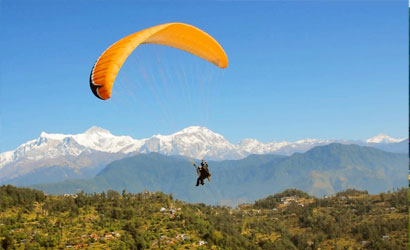
Nepal is best known for the world's highest mountains and beautiful trekking trails but we have a great variety of experiences to offer to the visitors .Kathmandu and the nearby towns of Patan and Bhaktapur are regarded as open museum of medieval arts and architecture , boasting a total of seven UNESCO world heritage sites.
Beyond Nepal